

Living Labs at the Technion
The Sustainability Front supports research that advances campus sustainability through a Living Lab approach.
A Living Lab is a real-world testing environment that brings together researchers, students and campus operational units to develop practical sustainability solutions. The goal is to turn academic knowledge into actionable insights while learning from the day to day complexity of campus life.
These projects cover a broad range of topics: waste reduction and reuse, water and stormwater management, the built environment, energy, environmental health, user behavior and more. What connects them is a shared commitment to addressing real challenges and generating knowledge that can meaningfully improve the Technion campus.
Why a Living Lab?
Living Labs bridge research and practice by testing ideas directly on campus, making the findings both practical and relevant.
Eight Living Labs in Action
The videos on this page introduce each research group, their focus areas, methods and key recommendations.
We invite you to explore the Living Labs featured here and discover how each project contributes to advancing sustainability across the campus.
 |
 |
 |
 |
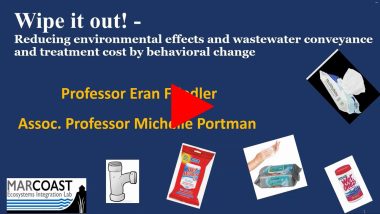
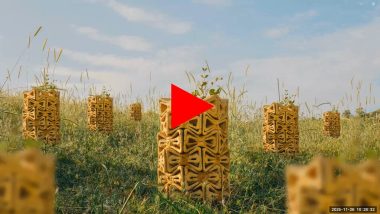
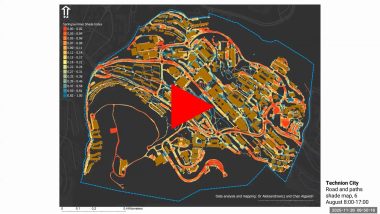
| Wipe It Out – how a behavioral campaign can reduce wipe usage and lessen the burden on sewage systems and the environment. | T-SEEK – 3D printed planting capsules, a new model for smart reforestation using engineering knowledge to restore landscapes. | Walkability – How do shade and topography affect our route? Understanding pedestrian movement as part of sustainable public space planning. |
|
 |
 |
 |
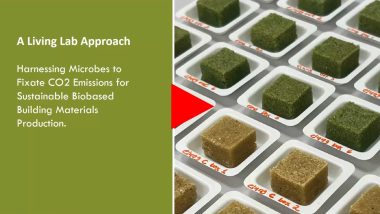 |
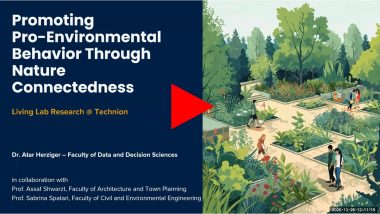
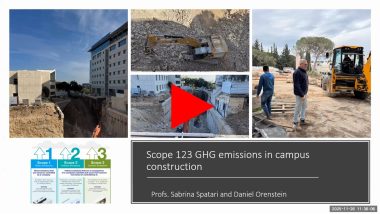
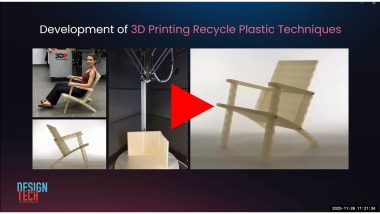
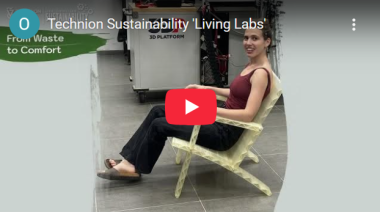
| Green Choices – What are the things that connect us to nature? | GHG Emissions – a real time emissions dashboard that measures and displays the carbon footprint of new construction. | From Waste to Comfort -combining sustainability and design to give new life to the plastic waste from Technion laboratories. | Biobased Chimneys – cultivating cyanobacteria that capture CO₂ and produce renewable, naturally formed construction materials. |
 |
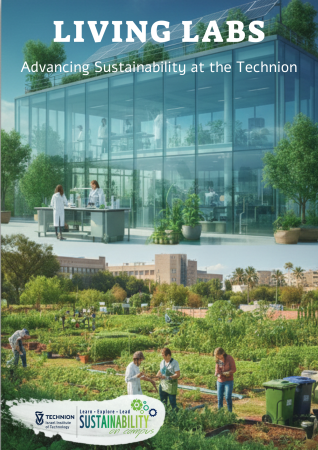 |
This booklet presents a summary of the Living Lab projects carried out at the Technion, initiated and funded by the Sustainability Frontier, as part of the first round of Seed grants, in the 2023-2024 academic year. To view the Living labs Summary Report, click here. |